
06 Nov 2025
Almost half a million people with long-term health conditions in the South West were unprotected from flu last winter
UKHSA South West concerned that many people at risk may not know they are eligible for a flu vaccine
- Over 411,000 people under 65 with one or more long-term health conditions (LTHCs) eligible for a flu vaccine in the South West received their flu vaccine last winter (2024-25), but 487,000 were unprotected
- Last winter (2024-25), just 46% of those aged under 65 with certain LTHCs in a clinical risk group in the region took up the vaccine offer
- For some clinical groups, the risk of influenza-related mortality compared with the general population is much higher[1]:
- 48 times more likely for those with chronic liver disease
- 47 times more likely for those with immunosuppression
- 40 times more likely for those with a chronic neurological disease
Thousands of people in the South West with long-term health conditions are being urged to get their flu vaccine, as figures reveal uptake remains concerningly low among those most at risk.
Latest data from the UK Health Security Agency (UKHSA) showed that last year, just 45.8% (411,629) of people under 65 with certain long-term health conditions in the South West were vaccinated against the flu last season.
This means 487,554 people in the region who were eligible remained unprotected, despite being at significantly higher risk of severe illness, hospitalisation and even death from flu.
The figures come as UKHSA warns that flu can be particularly dangerous for people with conditions including chronic respiratory disease, diabetes, chronic kidney disease, chronic liver disease, chronic neurological conditions, and immunosuppression.
For some clinical groups, the risk of flu-related death compared with the general population is stark: 48 times higher for those with chronic liver disease, 47 times higher for those with immunosuppression, and 40 times higher for those with chronic neurological disease.
Across the South West's local authorities, vaccine uptake varies considerably. South Gloucestershire had the highest uptake at 51.6%, with 21,571 people vaccinated. Meanwhile, Bournemouth, Poole and Christchurch had the lowest at 39.6%, with just 23,584 of 59,574 eligible people protected.
Other areas with uptake below the regional average include Cornwall and the Isles of Scilly (41.2%), Plymouth (41.9%), Torbay (42.5%) and Bristol (43.2%).
Dr Fiona Neely, Consultant in Health Protection at UKHSA South West, said:
"Every year we see many people across the South West with long-term health conditions ending up seriously ill in hospital from flu, and tragically some dying, when for most this could be prevented with a vaccine.
"If you have a long-term health condition like diabetes, asthma, heart disease, kidney disease or a condition affecting your immune system, you are eligible for a free flu vaccine. With nearly half a million people in our region still unprotected, I urge everyone eligible to come forward now.
"The flu vaccine offers the best protection against serious illness, and it is not too late to get vaccinated. Please don't put it off. Speak to your GP or pharmacist today and get yourself protected."
Estimates every year of excess winter deaths potentially attributable to influenza in England are published in the annual national flu reports[2] and range from less than 1,000 (2013 to 2014) to greater than 20,000 (2014 to 2015 and 2017 to 2018). More recently, over 15,000 deaths from flu were seen in England during the 2022 to 2023 season.
The risk of serious illness from flu is higher amongst children under 5 years of age, older people, those with certain LTHCs and also in pregnant women. People with one or more certain LTHCs in a clinical risk group who are eligible for the flu vaccine include:
- Chronic respiratory disease
- Chronic heart disease and vascular disease
- Chronic kidney disease
- Chronic liver disease, including chronic hepatitis
- Chronic neurological disease. Including stroke, transient ischaemic attack and conditions in which respiratory function may be compromised due to neurological or neuromuscular disease.
- Diabetes and adrenal insufficiency
- Immunosuppression due to disease or treatment. Including patients undergoing chemotherapy, radical radiotherapy, solid organ transplant recipients, bone marrow or stem cell transplant recipients, people living with HIV, multiple myeloma or genetic disorders affecting the immune system.
- Asplenia or dysfunction of the spleen, including sickle cell disease
- Morbid obesity (class III obesity)
The list above is not exhaustive, and doctors should apply clinical judgment to take into account the risk of flu exacerbating any underlying disease that a patient may have, as well as the risk of serious illness from flu itself. A vaccine should be offered in such cases even if the individual is not in the clinical risk groups specified above.
Dr Matthew Dominey, Consultant in Public Health and Screening and Immunisation Lead for NHS England South West, said:
“If you have a long-term health condition such as a heart problem, diabetes, or a lowered immune system, it is vital that you take up the offer to get your free NHS flu vaccine.
“Flu cases are on the rise, and having a long-term health condition can make you more susceptible to the effects of flu, while increasing your risk of developing other illnesses such as bronchitis and pneumonia. Flu can also make some long-term health conditions worse, even if they are well-manged and you normally feel well.
“If you’re not sure if you’re eligible for a flu vaccine, you can check on the NHS website or by contacting your GP.”
Beth, who lives in Bristol, is eligible for the flu vaccine:
“I get the flu vaccine every year as I have heart and lung conditions that put me at higher risk of becoming seriously ill with flu. Getting the vaccine, therefore, helps protect me, but also reduces the impact on the NHS at their busiest time of year.”
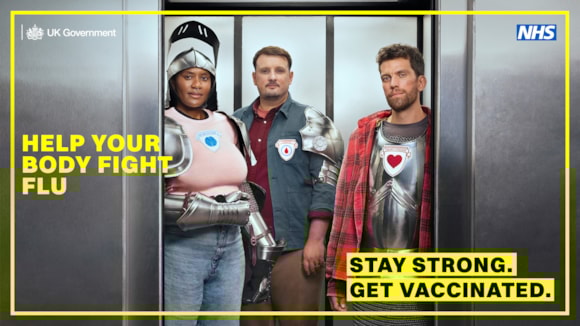
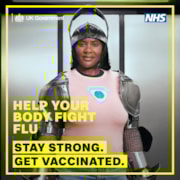
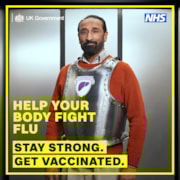
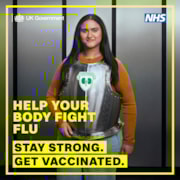
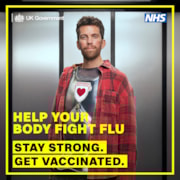
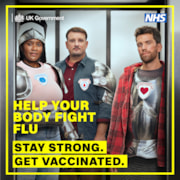
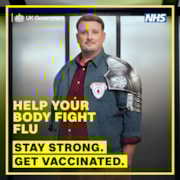
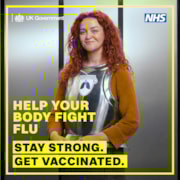
The Department of Health and Social Care, with UKHSA and NHS England, has launched a new campaign urging people to protect themselves against flu this winter. Campaign activity prioritises audiences who are eligible for the flu vaccine, including pregnant women, parents of children aged 2-16 years, and people living with certain long term health conditions. The campaign message is simple and calls on eligible groups to ‘Stay strong. Get vaccinated’ for flu this winter. The campaign uses protective imagery like bubble wrap and armour to illustrate the protection that vaccinations offer.
The marketing will run across TV, video on demand, radio, outdoor advertising and social channels. This is supported by media outreach, partnership activity, social media, and more.
Contact Information
Lanvell Blake
lanvell.blake@ukhsa.gov.uk
Notes to editors
- Table 19.1 Influenza-related population mortality rates and relative risk of death among those aged 6 months to under 65 years by clinical risk group in England, September 2010 to May 2011. Published in The Green Book Chapter 19 Influenza: https://assets.publishing.service.gov.uk/media/6838317b5150d70c85aafab9/Green-book-chapter-19-influenza-28May2025.pdf
Uptake data for the South West (1 September 2024 to 28 February 2025):
- Total registered for vaccination (under 65 clinical risk groups): 899,183
- Total vaccinated: 411,629
- Percentage uptake: 45.8%
Local authority breakdown available here and below:
|
Local Authority |
Under 65 years (at-risk only) number of patients registered |
Under 65 years (at-risk only) number of patients vaccinated |
Under 65 years (at-risk only) percentage uptake (%) |
|
Bath and North East Somerset |
28,513 |
13,992 |
49.1 |
|
Bournemouth, Poole and Christchurch |
59,574 |
23,584 |
39.6 |
|
Bristol, City of |
82,478 |
35,668 |
43.2 |
|
Devon |
122,714 |
57,542 |
46.9 |
|
Dorset |
54,291 |
26,458 |
48.7 |
|
Gloucestershire |
105,971 |
50,380 |
47.5 |
|
Kernow (Cornwall and Isles of Scilly) |
95,781 |
39,490 |
41.2 |
|
North Somerset |
35,137 |
17,416 |
49.6 |
|
Plymouth |
42,708 |
17,886 |
41.9 |
|
Somerset |
89,355 |
41,660 |
46.6 |
|
South Gloucestershire |
41,803 |
21,571 |
51.6 |
|
Swindon |
41,121 |
18,077 |
44.0 |
|
Torbay |
23,533 |
10,004 |
42.5 |
|
Wiltshire |
76,204 |
37,901 |
49.7 |
Note 4: the data for those under 65 years and clinically at-risk includes pregnant women with other risk factors but excludes otherwise 'healthy' pregnant women and carers.
Note 7: during the 2024 to 2025 season, for the first time adult groups (excluding pregnant women) were eligible from 3 October, rather than 1 September as in previous seasons. Therefore, data for those aged 65 years and over, and those aged under 65 years in clinical risk groups, is not comparable with previous seasons. As in previous seasons, children and pregnant women were eligible from 1 September.
Downloads

Powered by Onclusive PR Manager © 2026