
07 Apr 2025
'Andi Biotic' is on a one-pill mission to keep antibiotics working in the North West
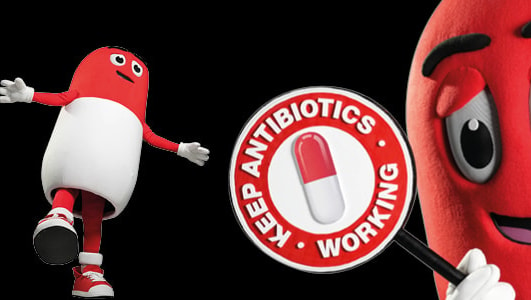
UKHSA's new digital campaign is led by mascot 'Andi Biotic’ who aims to challenge misconceptions about antibiotics and tackle the threat of antimicrobial resistance.
The UK Health Security Agency (UKHSA) has launched a new digital campaign to help keep antibiotics working for us all across the North West and tackle the threat of antibiotic resistance.
The digital campaign will be led by a new comedic mascot character, ‘Andi Biotic’. Throughout the six-week-long campaign, ‘Andi Biotic’ will embark on a mission to answer people’s uncertainties about when and how to take antibiotics to help preserve their effectiveness for us today and future generations.
Andi will come to the rescue in a variety of scenarios to make sure people are taking antibiotics in the right way, including:
- not taking antibiotics for colds and flu, which they don’t work for, and this remains one of the biggest misconceptions about taking antibiotics
- only taking antibiotics when you have been prescribed them and taking them as directed by a healthcare professional
- not saving antibiotics for future use
The campaign will launch on UKHSA’s social media channels and at participating GP surgeries and pharmacies throughout April and May.
Antibiotic microbial resistance is a particular issue in the North West region. Latest data from the UKHSA ESPAUR report shows that the North West has the second-highest AMR burden among English regions. In 2023, London and North West regions continued (since October 2020, when mandatory reporting began) to report the largest number of acquired carbapenemase-producing Gram-negative bacteria.
Dr Will Morton, Health Protection Consultant at UKHSA North West, said: “Antibiotics are essential to treat serious bacterial infections, such as meningitis, pneumonia and sepsis, but inappropriate use or overuse will mean they stop working against life-threatening conditions. Increasingly, the first antibiotics that patients receive aren’t effective at tackling their infections.
“This problem extends to everyone, as in the absence of effective antibiotics, cancer treatments and common surgeries like caesareans would become very high-risk procedures and for many people, could lead to infections that cannot be treated and may become fatal. Our declining ability to treat and prevent infections is having an increasing impact, particularly on our poorest communities.
“There are steps everyone can take. Take up the vaccinations you are eligible for, to help stop infections in the first place. Only take antibiotics if you have been told to do so by a healthcare professional. Do not save some for later or share them with friends and family. This isn’t just for your own health - it’s about protecting everyone in our communities and future generations.”
Dr Michael Gregory, Regional Medical Director for NHS England – North West, said: “Antimicrobial resistance is one of our biggest health threats, with increasing numbers of bacteria developing antibiotic resistance each year, meaning antibiotics simply won’t do their job and fight infections like they should.
“This makes it harder to treat conditions that were once easily managed and could even send us back to a pre-antibiotic era where routine surgeries like C-sections, hip replacements, and cancer treatments would become risky.
“That’s why it's crucial young people understand the proper use of antibiotics to help prevent drug-resistant ‘superbugs’ now and in the future.”
Antibiotic-resistant bacteria of any kind are less likely to respond to some treatments, which can cause serious complications, including bloodstream infections, sepsis and hospitalisation. People who get a bacterial infection that is resistant to one or more antibiotics are more likely to die from their infection compared to those who have an antibiotic-sensitive infection.
Antibiotic resistance occurs naturally, but misuse, including underuse, overuse, and inappropriate use, of antimicrobial medicines is one of the major drivers of drug-resistant infections.
One young adult patient who suffers from recurrent urinary tract infections (UTI) has spoken about the impact on their life when the UTIs became resistant to antibiotics. They said: “The UTI was deeply ingrained trapping me in an endless cycle of recurring infections, resisting one antibiotic after another. It destroyed me and my bladder. Any physical enjoyment in my life, such as dancing and intimacy, was drastically impacted. To keep the UTI under control, I have a strict daily regime, drinking gallons of water, and taking a supplement for days after intimacy. I’m a shell of the person I used to be. I didn’t even know what antibiotic resistance was before this. I live in hope for the day a solution that works can be found, so I can dance and live life freely again.”
Contact Information
Michelle Rushton
Communications Officer
UK Health Security Agency North West
0344 225 0562 (option 0 then option 5)
07816090063
michelle.rushton@ukhsa.gov.uk
@UKHSA_NorthWest


Powered by Onclusive PR Manager © 2026